Tuesday, September 27, 2016

This Quickly Turned into a Jimmy Fallon Hate Rant, but We Got it Back on Track... Mostly

Its interesting what does and doesn’t have the capacity to become a meme. It's not an exact science, and without really looking it seems entirely random, as the humor involved itself is often very random. Something has to reach and appeal to a pretty big group for it to become the cultural phenomenon. The example of Drake’s dance is perfect.  It already had a massive audience when he put it in his music video. Someone, or a number of people, saw the dance, thought it was funny, and isolated that section, exposing it to even more people. To really become a meme though, something has to be malleable and be able to be applied in other ways creating more jokes, such as in him throwing pokeballs, or at the end of its life cycle in a T-mobile commercial. The “world village” is what makes memes possible as things are able to spread quickly around the world, elsewise by the time it reached somewhere else, the humor would have passed.
It’s difficult to force virality. The reason anyone can be successful with it is the mere volume with which such things are pumped out. When I saw Jimmy Fallon as I read through this blog post, I couldn’t help but groan. I have never cared for him.  He remains to this day, my least favorite SNL cast member. All of his supposed best moments are of him breaking character and laughing.  His lack of professionalism was a novelty at first, but it got old as he even became a distraction in other people’s skits.  One might ask why this isn’t funny but Stefon, a skit intended to make Bill Hader break character is. That could stem from the fact that it's rare for Bill Hader to ever break, making it better when he does, whereas Fallon breaks so frequently. It’s so over the top and out there that it's almost like a fun test, to see him set up for failure. Fallon breaks at almost nothing, as seen is this video where he doesn’t make it 5 seconds into an unfunny song. (http://www.nbc.com/saturday-night-live/video/holiday-treat-for-all/n11532). The problem with then giving him his own show, is that’s all he does still. He can’t stop laughing at himself in his monologues, interviews, sketches, or games. He acts childish, he appeals by trying to be the cute one, all in awe of his guests, giggling, jumping, and clapping with them. It appeals to some, allowing him to be successful.  His segments are short and simple, allowing them to succeed on the internet as standalone clips. When you go to Fallon’s youtube page, the interviews aren’t even kept together. They are divided into short clips by their topic, though this is also to boost his views.  It’s safe. Jimmy Fallon is the mild salsa of television. No one is upset by him, but it can just leave you wanting more, or significantly less.
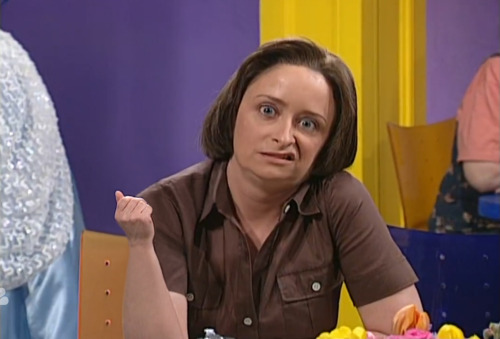
Watching Jimmy Fallon like...
How I watch Jimmy Fallon

Tuesday, September 20, 2016

Don't Kick Her Sharkeisha

I would summarize my middle school experience with World Star Hip-Hop. These videos hit very close to home. I was constantly being shown videos from the sight and the “live action” versions were fairly frequent. Shamefully enough, I even had a friend on it once.  Every time there was a fight, kids would rush to the scene leaving class to see the spectacle. By the school rules, you could receive a referral for watching a fight, but it was never enforced because they’d have to give them out by the dozen. A lot of it, though, I think has to just do with the spectacle of it all. It’s two people going wild, giving into emotion and attacking each other. In a sense, you can feel superior, having kept a cool head. Still, that can’t be applied to every situation. Many of the fights that were planned ahead of time. These spars were still heavily attended, in spite of being scheduled well in advance. You see someone getting the mess kicked out of them and think “glad that's not me.” The relief felt is released in laughter.  
However, I think this mainly applies to these school fights. We all knew there wasn’t really going to be too much of a risk.  With some very notable exceptions, things never really got too out of hand or even had the chance.  The resource officer would be on the scene soon to break it off before anyone could get the other pinned, รก la Sharkeisha. At the very least it was two consenting parties. It was a short diversion from the dullness of class.  Maybe Sharkeisha gives me nostalgia. In other situations, one might feel compelled to act to prevent things from going too far.  One may be able to laugh because there isn’t anything they can do. That’s a big part of the vine culture. You’re removal from the instance allows you to laugh.  There’s nothing you can do about it now. It’s like when people say to vegetarians, the cow’s already dead (though there’s usually a little more to it for vegetarians).  
Sharkeisha is a different story. It wasn’t a fight, it was an assault. The other girl was looking away holding her backpack and phone/iPod when Sharkeisha sucker punched her. The danger really lies in the celebrity that Sharkeisha became. People began glorifying the actions of beating a girl like that. The victim now has to live with getting beaten and then being treated as a punchline (pun very much intended) rather than a victim.

Sunday, September 11, 2016

I Never Watched the Movie So I Can't Really Think of a Creative Title

In scenes like the one from the Hangover, the line between something being funny and cruel is a little fuzzy, and it varies from person to person. A person's tolerance for this kind of thing has a lot to do with their place in life or how they were brought up. But what I think is a pretty universal dividing line is the point at which someone being stupid and inflicting pain on themselves becomes something more permanent. Watching someone hurt themselves is funny, but watching someone cripple themselves is cringe inducing. In this scene, the audience knows the characters are all safe. There’s still too much time left in the movie to lose any more characters. Tasers can certainly cause some long term damage but these people likely aren’t at any real risk.
This line between stupidity leading to momentary pain and enduring pain is why I genuinely cannot watch the show tosh.0. There was a video of a guy who fell and his bones were sticking out of his shins. Some people(or sadists if you will) might like seeing things taken that far. Others might just laugh because they don’t know what else to do, in shock. The average person though, isn’t going to enjoy someone getting maimed. That’s why the show has its niche carved out on Comedy Central.  Compare this to a show like America’s Funniest Home Videos, where people hurting themselves is limited to people falling, getting dropped, or hit in much less harmful ways. They’re going to have a bruise, but no long term trauma. It could even be a relatability thing to some people. You think, “I’ve done that. Thank goodness there wasn’t a camera then.” You laugh, and you see them laughing at themselves from the audience. It's more good natured. Its more universal allowing to have stayed on the air since 1990, though it has suffered a recent drop in it’s syndication with the rise of the Internet and insufferability of Tom Bergeron. On a related note, it is still on and for some reason Carlton from The Fresh Prince of Bel-Air is the host, which might itself be a lesson on the incongruity theory.
I think what works in that scene is less the violence itself, and more the entire scenario. There was so much wrong with that scene if you compare it to how things work in the real world. 1) They brought a bunch of strange men into a school with children, specifically three men who had just been caught for a crime. 2) They Tasered them in front of a bunch of children which could very easily have led to some scarring and distrust towards the police. 3) They then allowed the kids to use the Taser. Luckily they didn’t pick a kid who would try and Taser a classmate. The incongruity between this scenario and the real world is funny in its own way. Whether or not something is funny to someone can vary, but also so can why it is funny to them.

Tuesday, September 6, 2016

This Response Post is Going to be Legen- wait for it...

     The rule of three is very common across the different areas of study.  It is especially common in english, where groups of three are seen consistently. There are the three bears, little pigs, and billy goats gruff. Ebenezer Scrooge is visited by three spirits. Its seen as the minimum needed to establish a pattern and is short enough to be memorable.  In math you're taught to graph using three points to establish a trend. It even appears in law and the arts in a similar manner.
     What makes it different in comedy is that the first two typically establish some kind of pattern for the third one to break in some unexpected way as to produce laughter. Its like an extension of the incongruity theory.  Where the first and second examples are setting an expectation for the last one to let down. The rule of three might not seem entirely necessary in many examples as the third is incongruous on its own. Barney simply saying "a hug is like a public dry hump" is certainly not something the average person would say making it incongruous in that sense. However, Robin's two examples before that set up a benign aside about how to end an encounter with an ex, making Barney's statement stick out even more.
     Barney himself is a very strong example of another trend in comedies, main characters that are pretty bad people. His character is defined by having sex with women under false pretenses, behaving like a spoiled child, and putting any chance with women over his own friends. Thats what makes him funny to the audience. The rest of the people on that show have unsettling flaws of their own.  Maybe its an incongruity thing with them acting contrary to what it socially acceptable. On the other hand it also links to the superiority theory.  We think we know better than these people so we laugh at how shallow or broken they are. The relief theory could have a hand in it just as well.  We laugh because we see people acting in ways that we ourselves might if it weren't so discouraged by society. Its a cathartic thing.  Either way, you see it in almost every show from How I Met Your Mother to Friends to Always Sunny in Philadelphia, going back to Seinfeld and even further back to shows like the Honeymooners. It seems as old as the comedy itself.
 Speaking of catharsis...

-Dary